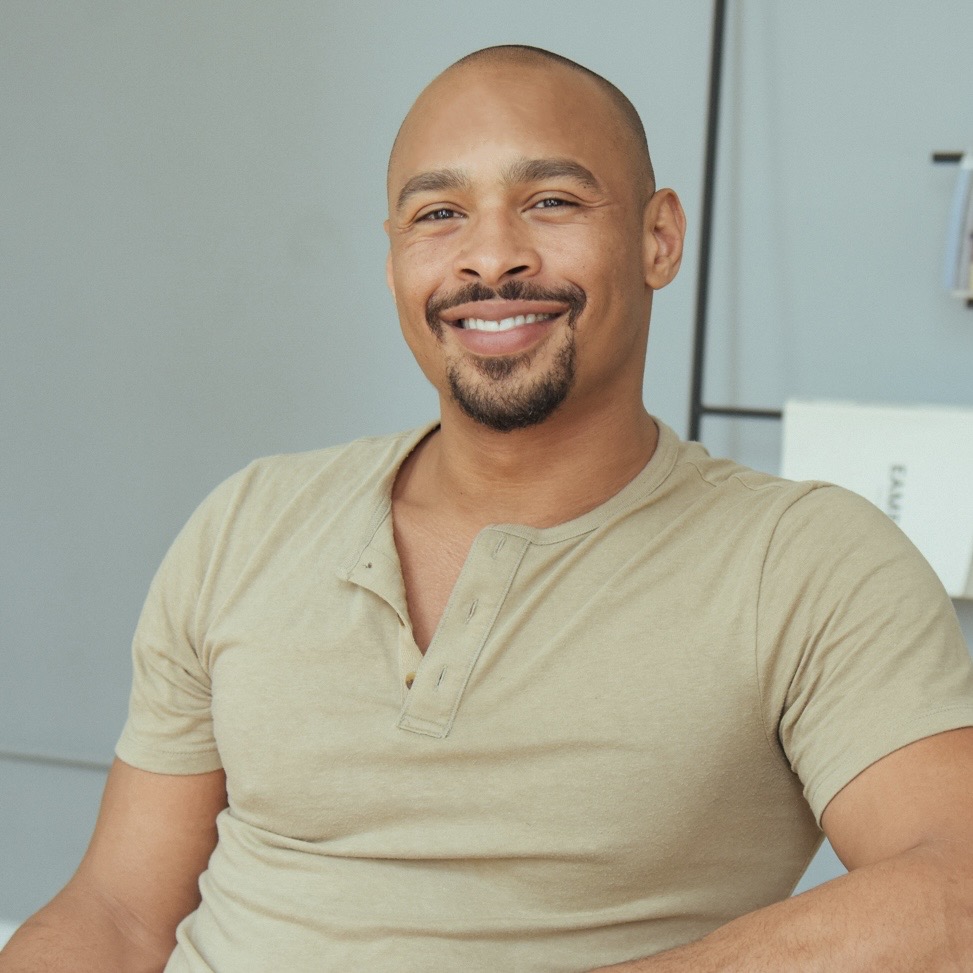
Justin Barry

Justin Barry

ML research engineer & applied scientist building intelligent systems

Former Applied Scientist @ Amazon • MS Computer Science • BS Math+CS

Machine Learning Applied Scientist and Research Engineer. Former Amazon ML Scientist (Prime Video).

I design and ship machine learning systems—generative and discriminative—across vision, language, and structured data. I own the math and the PyTorch. I build architectures from first principles when off-the-shelf fails, and I build agentic systems: multi-agent LLM pipelines that generate, critique, and rank.

My edge is messy problems. When baselines don't work and the objective isn't obvious, I turn ambiguity into a clear loss function and a system you can deploy.

I work remotely as an embedded research engineer—either as a full-time hire or via my LLC on longer-term engagements and scoped projects.

Available to hireBook intro callOpen to full-time and contract opportunities

Featured Project

Joint Image+Text Rectified Flow Training Loop

Building a joint image and text Rectified Flow model from scratch in PyTorch. This video walks through the complete training loop implementation, demonstrating the mathematical foundations and practical engineering of modern generative models.

Experience

Industry experience at scale

2024—Present

Machine Learning Consultant

Independent

Remote

Advising clients on ML system design and implementation. Building custom models from first principles for specialized domains and getting them into production.
2024—Present

Machine Learning Content Creator

YouTube Channel: @JustinTheJedi

Remote

Publishing state-of-the-art PyTorch implementations and first-principles math explanations of deep learning models. Topics: Rectified Flow, Continuous Normalizing Flow, Stable Diffusion XL, CLIP, GPT, Vision Transformers, ResNet, UNet, VAEs, AutoEncoderKL.
2023—2024

Senior Machine Learning Scientist

Spotter

Los Angeles, CA

Prototyped an LLM-based ideation system for YouTube creators: ingested channel context (titles, summaries, genre tags, engagement) and generated structured pitches (idea, logline, beats, audience/hook, concept), designed for downstream ranking and iteration.
Built a silver-label / proxy "ground truth" pipeline to reconstruct reference pitches from Spotter's catalog using transcripts, frame captioning, and metadata as inputs to LLMs for dataset bootstrapping.
Defined objectives and evaluation datasets for ideas and thumbnails: designed rubric dimensions (originality, hook strength, channel fit, composition, hallucination severity, narrative cohesion), ran internal labeling sessions, and treated engagement metrics (views/CTR) as noisy auxiliary signals rather than primary labels.
Developed GPT-4–based judges for ideas and thumbnails (rubric scorers, pairwise preference judges for ranking, and multi-judge ensembles with one judge per dimension); measured alignment vs human labels (correlation, agreement, variance/instability on close calls) and characterized failure modes (ranking cycles, sensitivity to prompt phrasing). Work was later deprioritized as priorities shifted.
Fine-tuned and evaluated SDXL Turbo for thumbnail generation, moving from Replicate-based LoRA workflows to Diffusers for tighter control; experimented with animated thumbnail styles (ComfyUI-augmented datasets) and used judges + human rubrics to benchmark variants for faster offline iteration across model/prompt configurations.
2022—2023

ML Consultant

Independent

Remote

Built predictive ML systems for UFC fights using scraped fighter data and custom feature engineering.
2019—2022

Machine Learning Scientist

Amazon

Seattle

Improved global streaming by 2.9% by optimizing cover art selection with contextual multi-armed bandits and deep neural networks.
Built a two-tower recommendation model that learned joint representations of customers and images, so the system could predict which artwork a given viewer was most likely to click and watch.
Developed unsupervised clustering of Prime Video titles using topic models (LDA) and Wasserstein Autoencoders on customer review data to better organize the catalog and surface long-tail content.
Implemented distributed Bayesian logistic regression from scratch in PySpark to support large-scale inference and decision-making over tens of millions of customers.
Designed and analyzed online A/B and multi-armed bandit experiments to validate model changes before full rollout.
2013—2017

Senior Software Engineer

CSRA Inc

Washington, DC

Led enterprise Java app development, Docker-based testing, and prototyping.

Technical Deep Dives

Building advanced ML architectures from first principles
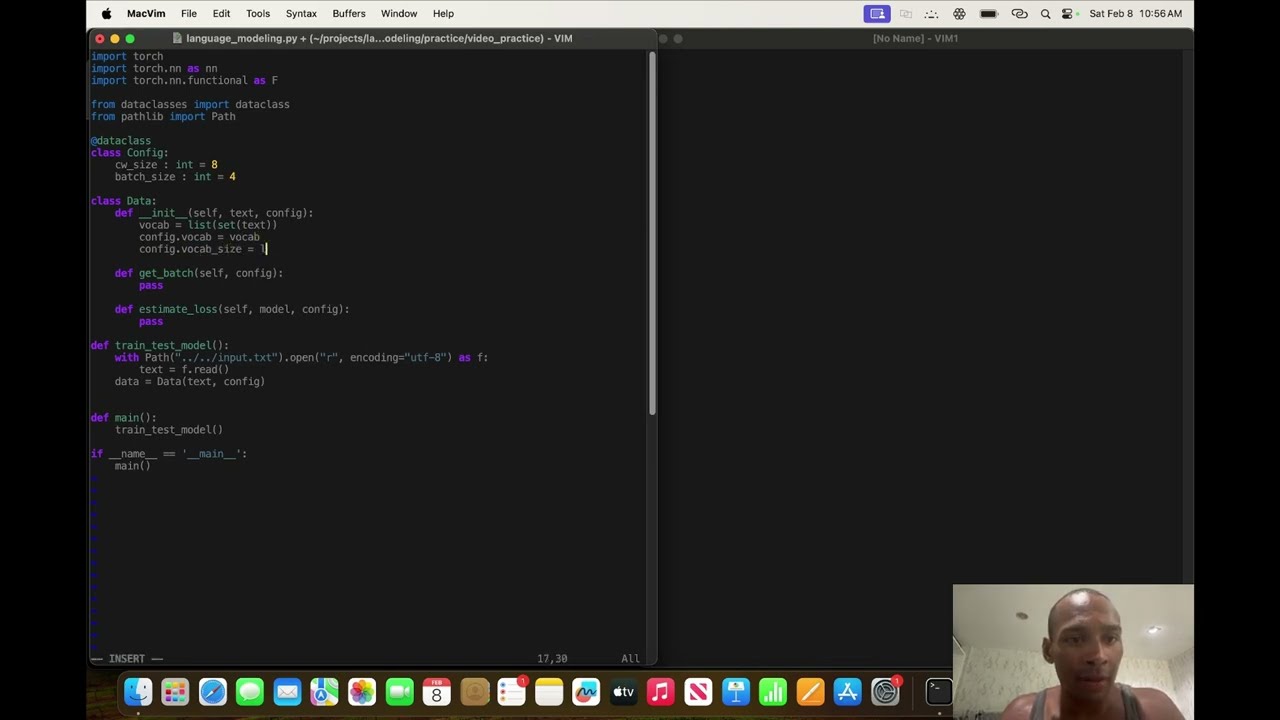
NanoGPT from scratch in PyTorch
45 min

NanoGPT from scratch in PyTorch

Complete implementation of a GPT-style transformer language model, covering attention mechanisms, positional encodings, and autoregressive training.
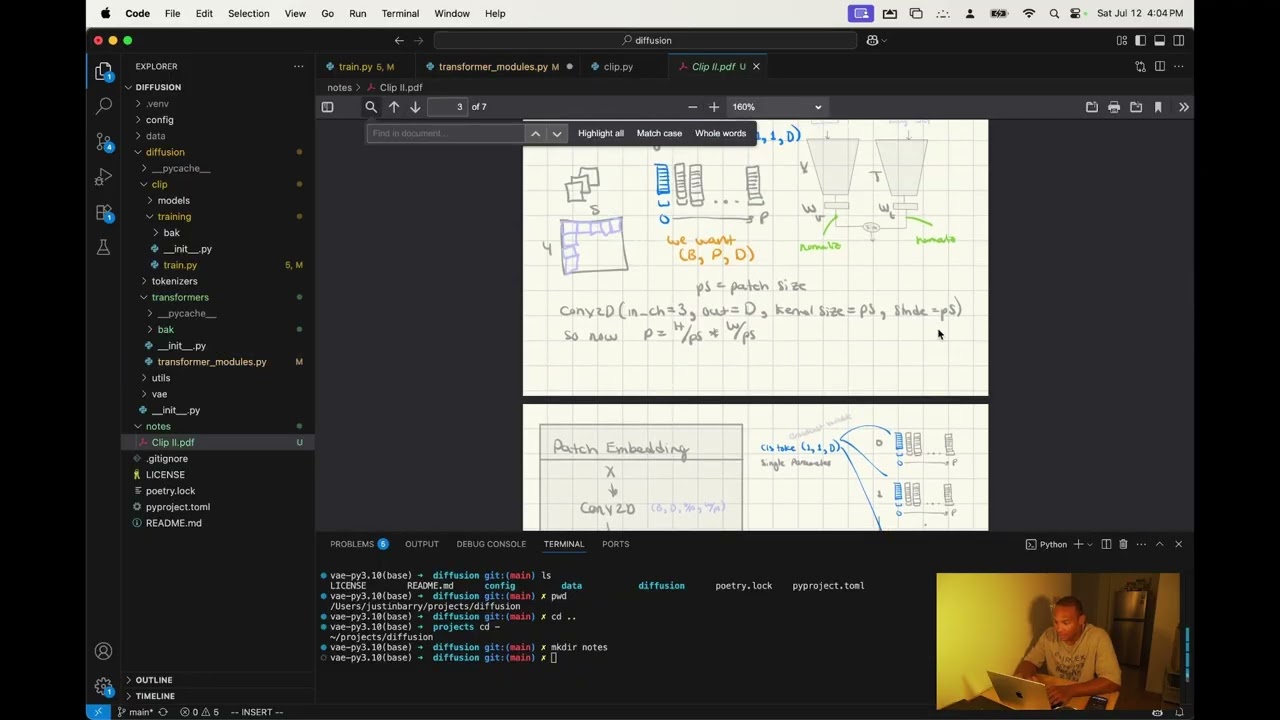
CLIP from scratch in PyTorch
52 min

CLIP from scratch in PyTorch

Building OpenAI's CLIP model from the ground up—dual encoders for vision and language with contrastive learning objectives.
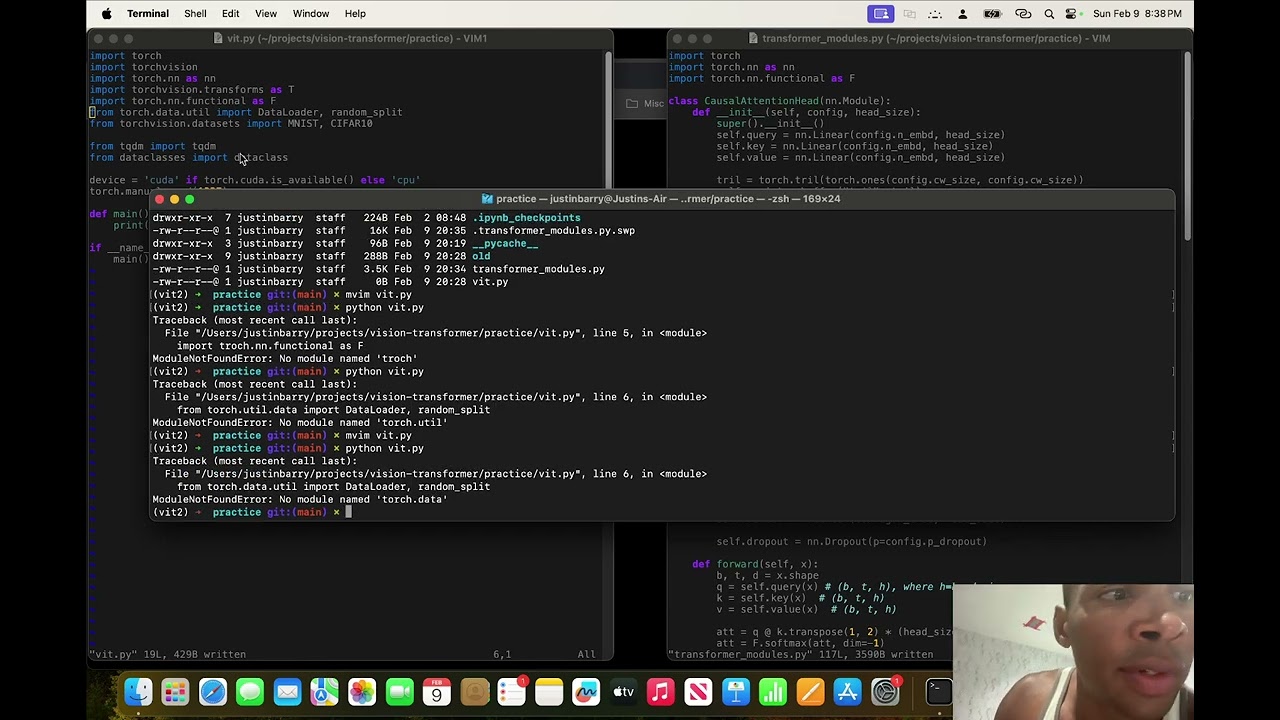
Vision Transformer from scratch in PyTorch
47 min

Vision Transformer from scratch in PyTorch

Building the Vision Transformer (ViT) architecture—patch embeddings, transformer blocks, and classification heads for image recognition.
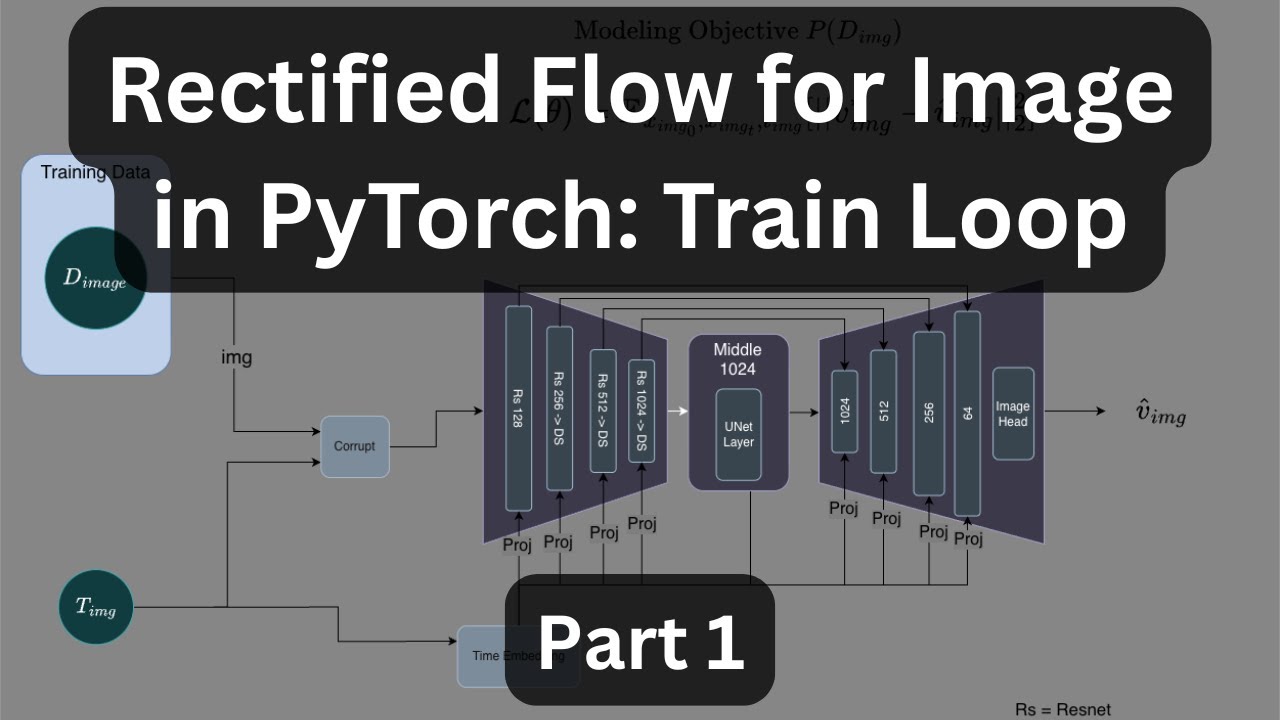
Rectified Flow for Image in PyTorch: Train Loop (Part 1)
58 min

Rectified Flow for Image in PyTorch: Train Loop (Part 1)

Complete PyTorch implementation of Rectified Flow for image generation—building the model architecture, training loop, and sampling process from the ground up.
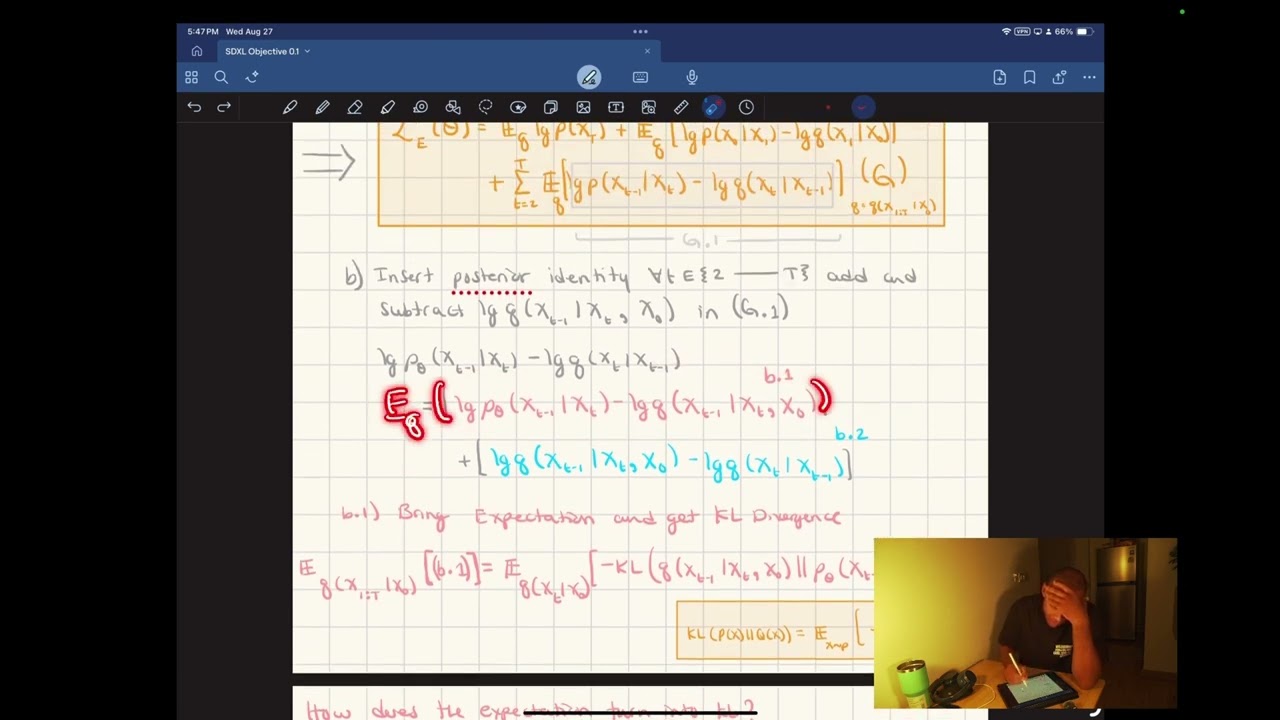
Stable Diffusion XL Objective Function Derivation
38 min

Stable Diffusion XL Objective Function Derivation

Mathematical derivation of the SDXL training objective, from variational lower bounds to practical noise scheduling strategies.
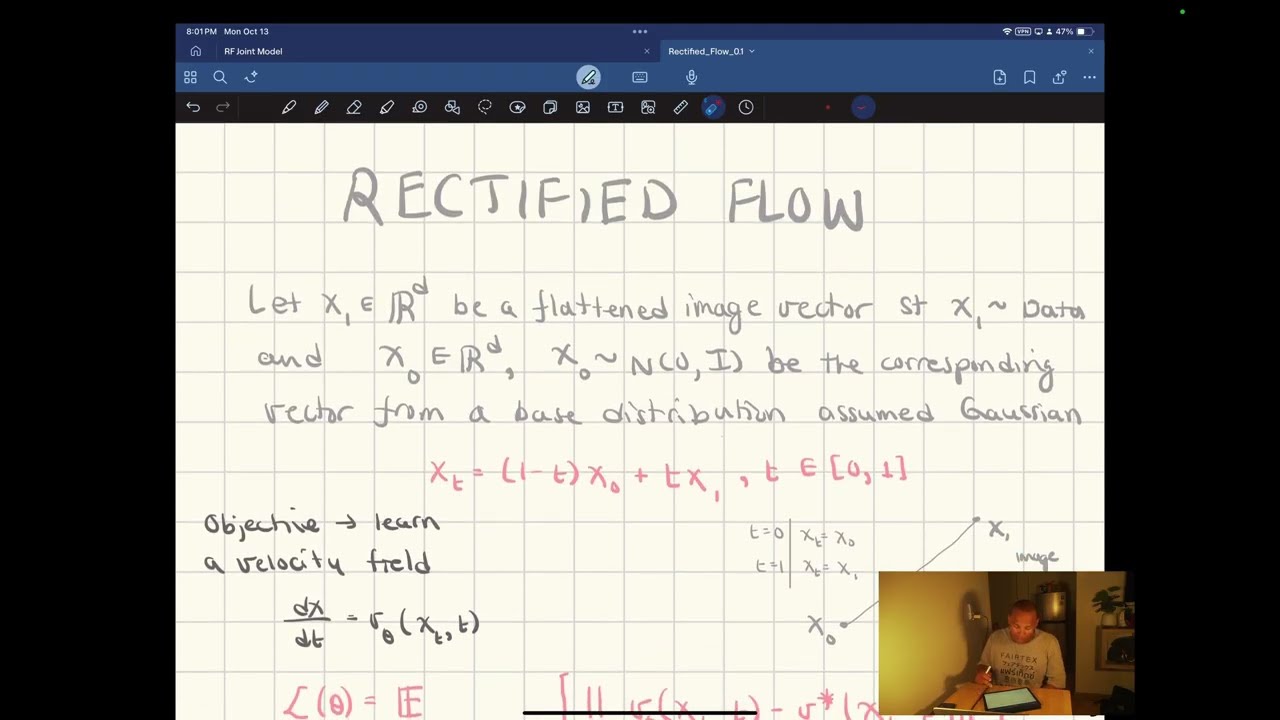
Rectified Flow objective explained
42 min

Rectified Flow objective explained

Mathematical breakdown of the Rectified Flow training objective for generative models—from continuous normalizing flows to practical implementation.
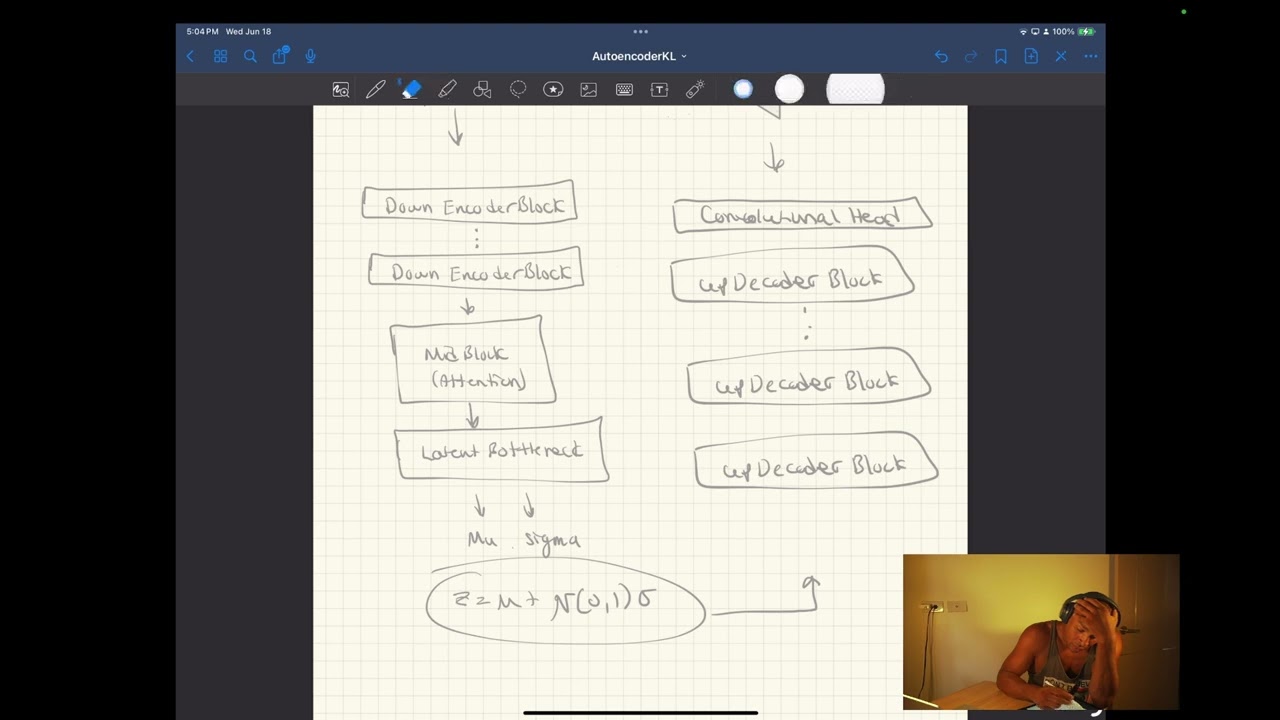
AutoencoderKL from scratch in PyTorch
41 min

AutoencoderKL from scratch in PyTorch

Implementing the KL-regularized autoencoder used in latent diffusion models—encoder, decoder, and KL divergence loss.
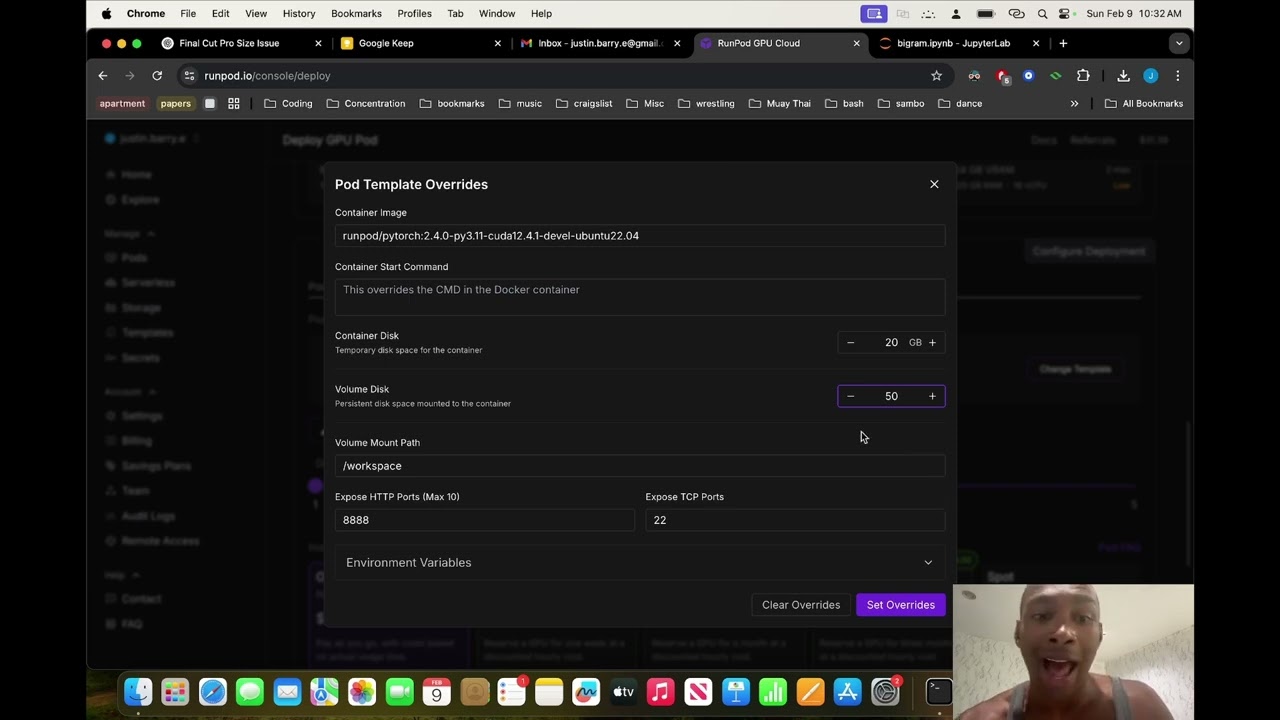
Deploying and training NanoGPT on Runpod
35 min

Deploying and training NanoGPT on Runpod

Practical guide to deploying GPT models on cloud infrastructure—setting up training pipelines, managing compute resources, and monitoring experiments.

Education

2017—2019

MS in Computer Science

(former PhD track)

University of Central Florida

2006—2011

BS in Mathematics and Computer Science

Dual Major

Christopher Newport University

2018—2019

GEM Fellowship

National GEM Consortium