
Justin Barry
ML research engineer & applied scientist building intelligent systems
Former Applied Scientist @ Amazon • MS Computer Science • BS Math+CS
Machine Learning Applied Scientist and Research Engineer. Former Amazon ML Scientist (Prime Video).
I design and ship machine learning systems—generative and discriminative—across vision, language, and structured data. I own the math and the PyTorch. I build architectures from first principles when off-the-shelf fails, and I build agentic systems: multi-agent LLM pipelines that generate, critique, and rank.
My edge is messy problems. When baselines don't work and the objective isn't obvious, I turn ambiguity into a clear loss function and a system you can deploy.
I work remotely as an embedded research engineer—either as a full-time hire or via my LLC on longer-term engagements and scoped projects.
Featured Projects
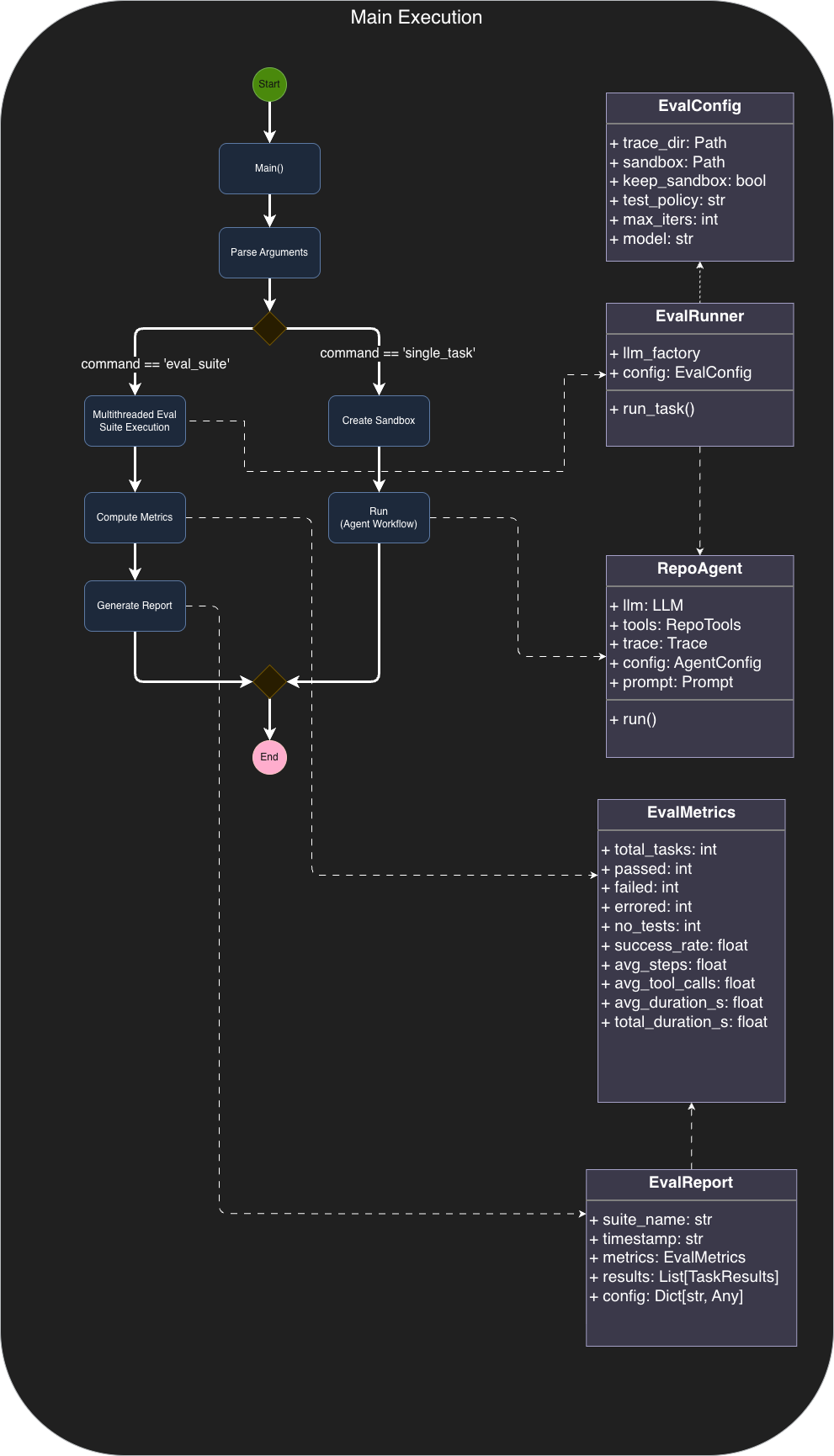
LLM Repo Agent: Bug-Fixing Code Agent
A deterministic agent system for automated bug fixing. The Python driver owns all control flow—iteration limits, tool dispatch, test execution, reflection triggers—while the LLM handles reasoning within strict boundaries.
Key engineering choices: JSON tool protocol with schema validation, multi-turn chat ChatCompletion LLM Adaptors for tool-call history reference, sandboxed repo copies for safe execution, Reflexion to correct driver loop events and failed tests, and multithreaded evaluation with Monte Carlo rollouts across task suites.
Fine-tuning pipeline: Teacher traces from GPT-4o generate step-level SFT data, followed by DPO preference pairs from pass/fail rollouts. The goal is distilling reliable tool-calling behavior into smaller open-weight models like Qwen2.5-7B.
Joint Image+Text Rectified Flow Training Loop
Building a joint image and text Rectified Flow model from scratch in PyTorch. This project demonstrates the complete training loop implementation, covering the mathematical foundations and practical engineering of modern generative models.
What it covers: Rectified flow theory, velocity field parameterization, joint image-text conditioning, noise scheduling, and the training objective that enables straight-line probability paths between noise and data distributions.
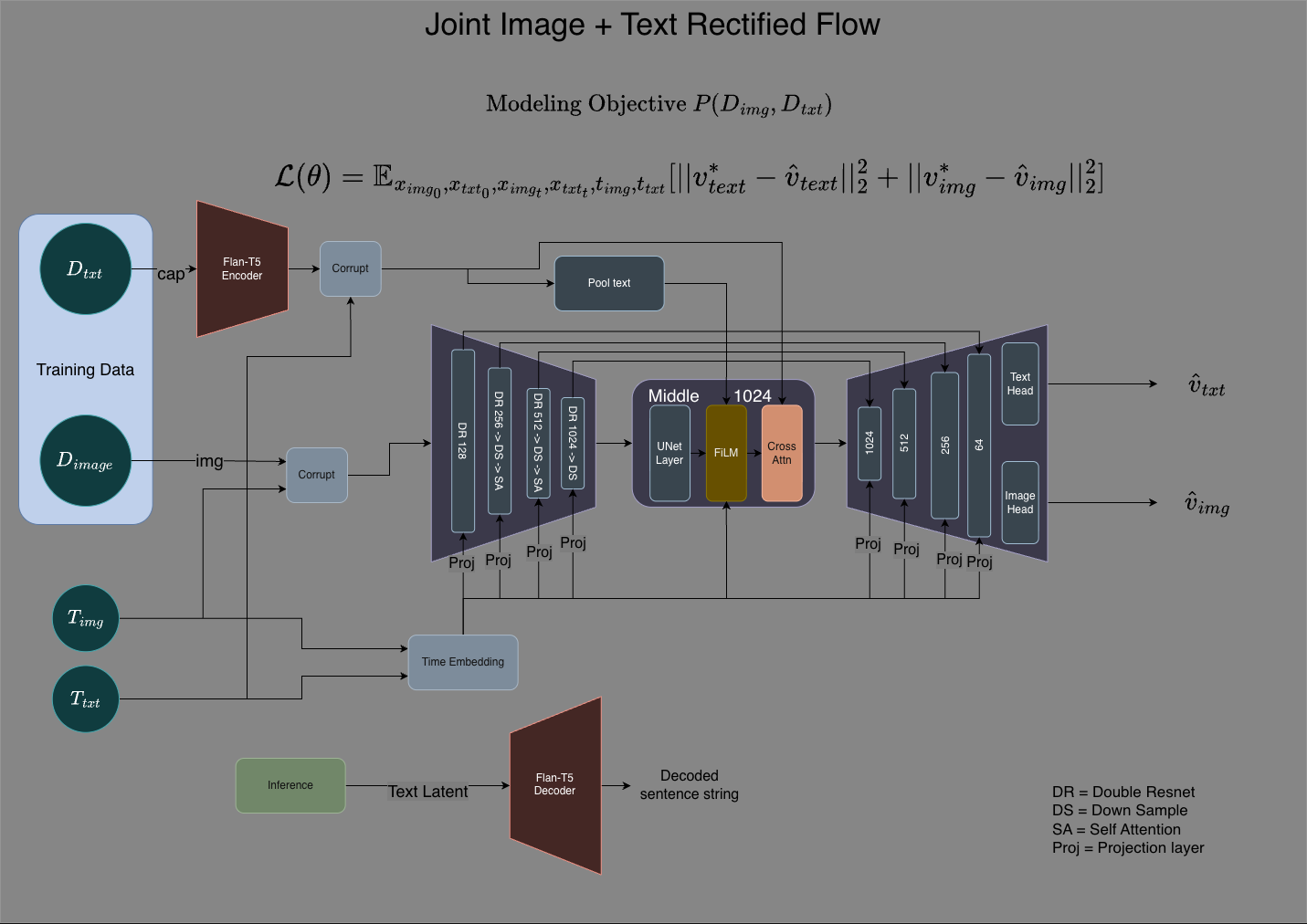
Architecture Diagram
Concept Explanation
Training Loop Implementation
Inference
Experience
Industry experience at scale
Senior ML Scientist
Togal.aiIndependent — Remote
Machine Learning Consultant
IndependentRemote
Machine Learning Content Creator
YouTube Channel: @JustinTheJediRemote
Senior Machine Learning Scientist
SpotterLos Angeles, CA
ML Consultant
IndependentRemote
Machine Learning Scientist
AmazonSeattle
Senior Software Engineer
CSRA IncWashington, DC
Technical Deep Dives
Building advanced ML architectures from first principles
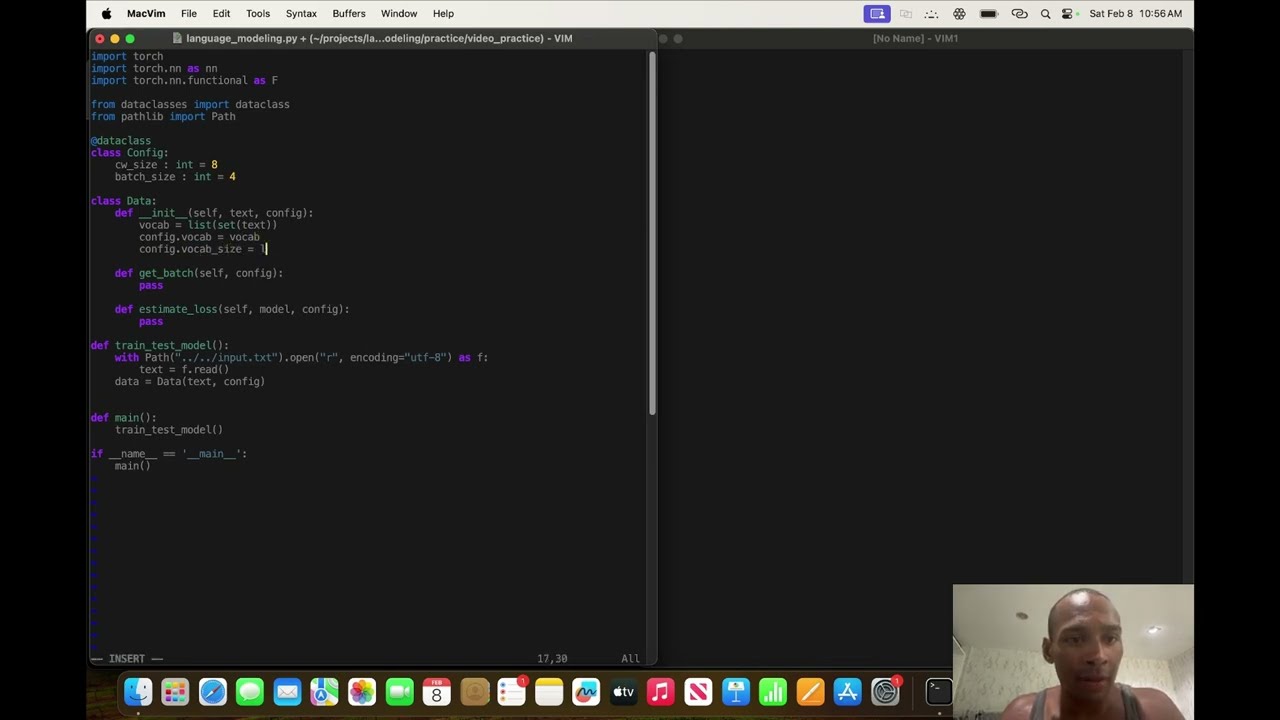
NanoGPT from scratch in PyTorch
Complete implementation of a GPT-style transformer language model, covering attention mechanisms, positional encodings, and autoregressive training.
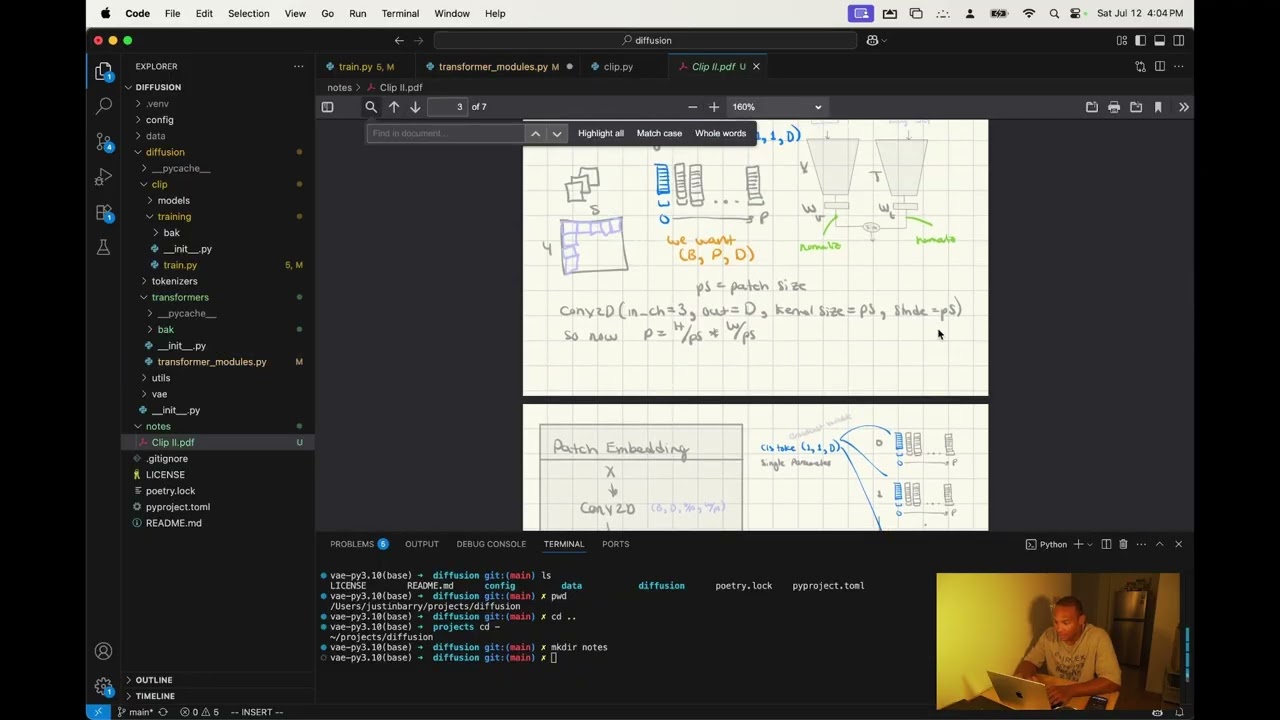
CLIP from scratch in PyTorch
Building OpenAI's CLIP model from the ground up—dual encoders for vision and language with contrastive learning objectives.
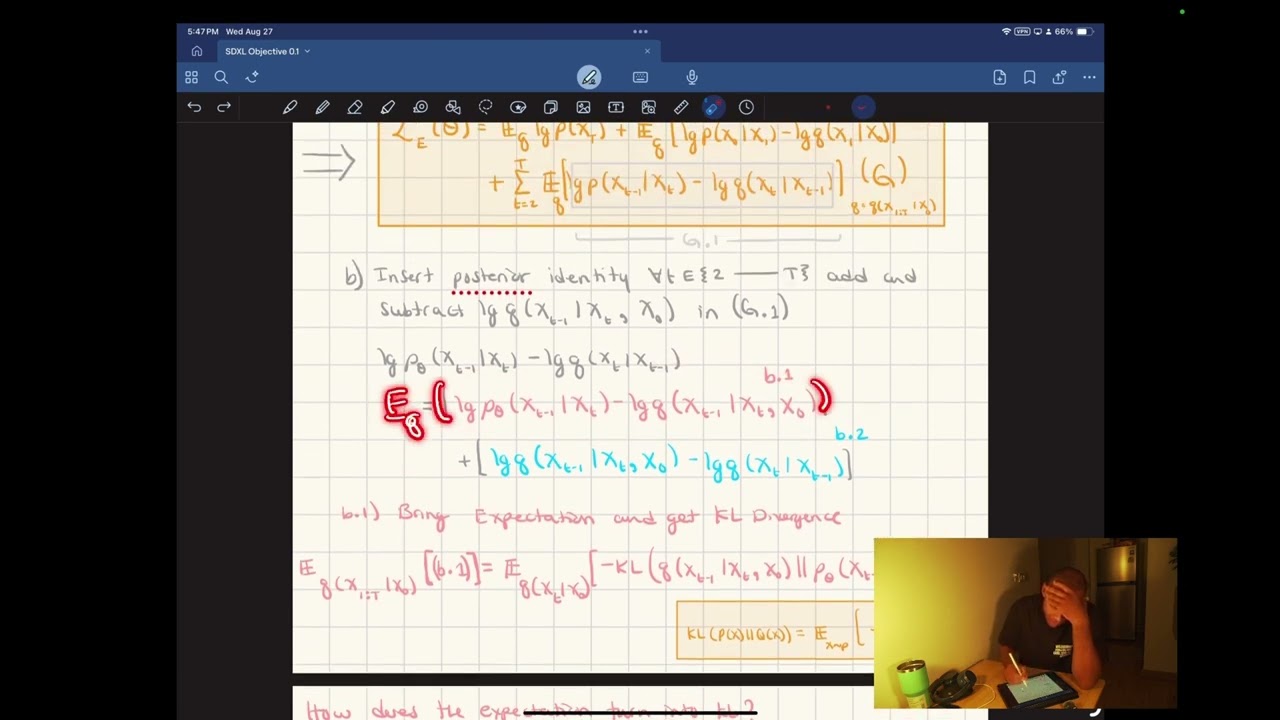
Stable Diffusion XL Objective Function Derivation
Mathematical derivation of the SDXL training objective, from variational lower bounds to practical noise scheduling strategies.
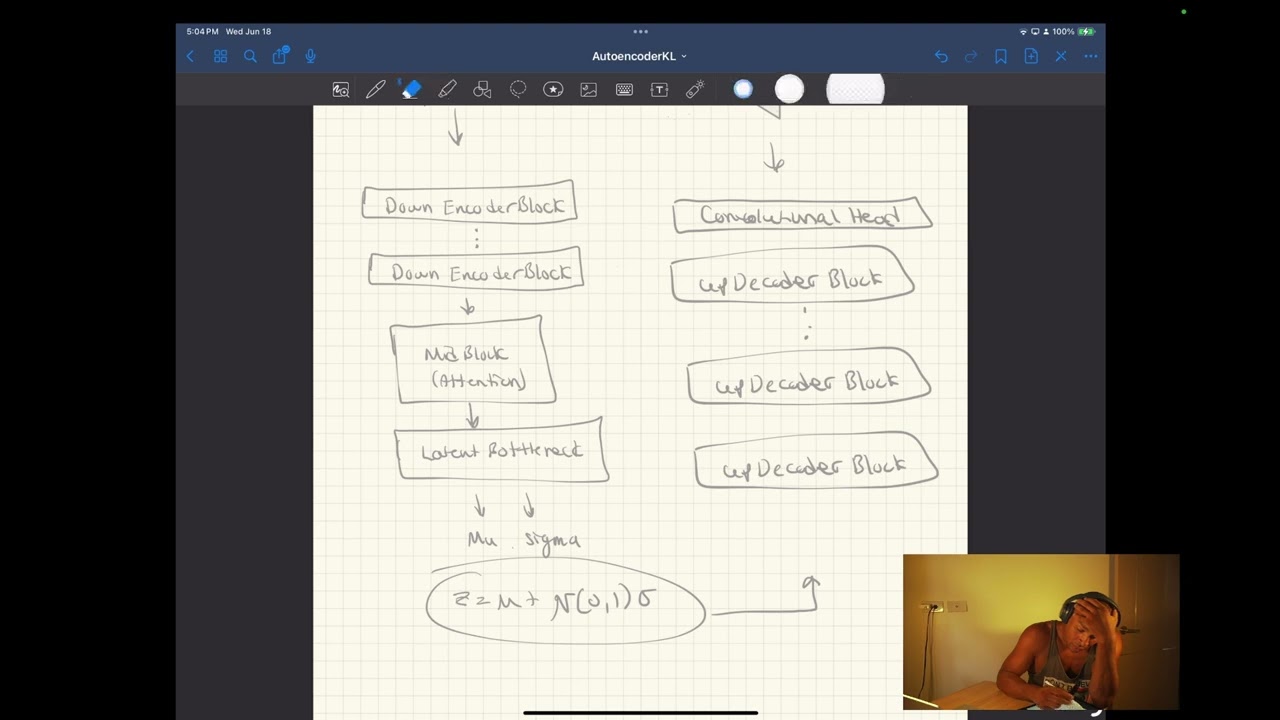
Building SDXL's AutoencoderKL from Scratch in PyTorch
Implementing the KL-regularized autoencoder used in Stable Diffusion XL—encoder, decoder, and the variational objective that enables latent space compression.
Featured Blog Posts
Deep dives into ML research and engineering
Modern LLM Post-Training Series
A comprehensive 5-part series covering PPO-RLHF, DPO, GRPO, GDPO, and practical SFT experiments. Learn the evolution of post-training algorithms and what each method removes or modifies.
JanusFlow
JanusFlow unifies image understanding and generation in a single LLM backbone using rectified flow. This post explains the architecture, training stages, representation alignment, and why the shared backbone matters.
Tiny Recursive Model (TRM)
TRM simplifies HRM by removing fixed-point theory, eliminating ACT's extra forward pass, and backpropagating through full unrolled recursion with no-grad refinement passes.
Essential PyTorch: the 5% that shows up in almost every serious model build
PyTorch looks huge from the outside. In practice, I build Transformers, CLIP, diffusion, flows, and VAEs using a small set of tensor and module patterns over and over. This post is that core.
Education
MS in Computer Science
(former PhD track)University of Central Florida
BS in Mathematics and Computer Science
Dual Major
Christopher Newport University
GEM Fellowship
National GEM Consortium