Research
LLM Repo Agent v2: What's changed since v1
•8 min read
LLM Repo Agent V2 — What changed since V1 (filled outline)
1) New LLM adapters: Chat Completions + Together
-
What changed
- Added a new provider adapter that talks to models through a Chat Completions-style API.
- Added a Together adapter so the agent can run inference and fine-tuning workflows on Together-hosted models.
-
Why it changed
- V1's provider wiring made it harder to standardize message formatting, tool-call handling, and multi-turn behavior across models.
- Moving to a single "Chat Completions" abstraction makes the rest of the agent loop (tools, reflection, parsing, tracing) more uniform.
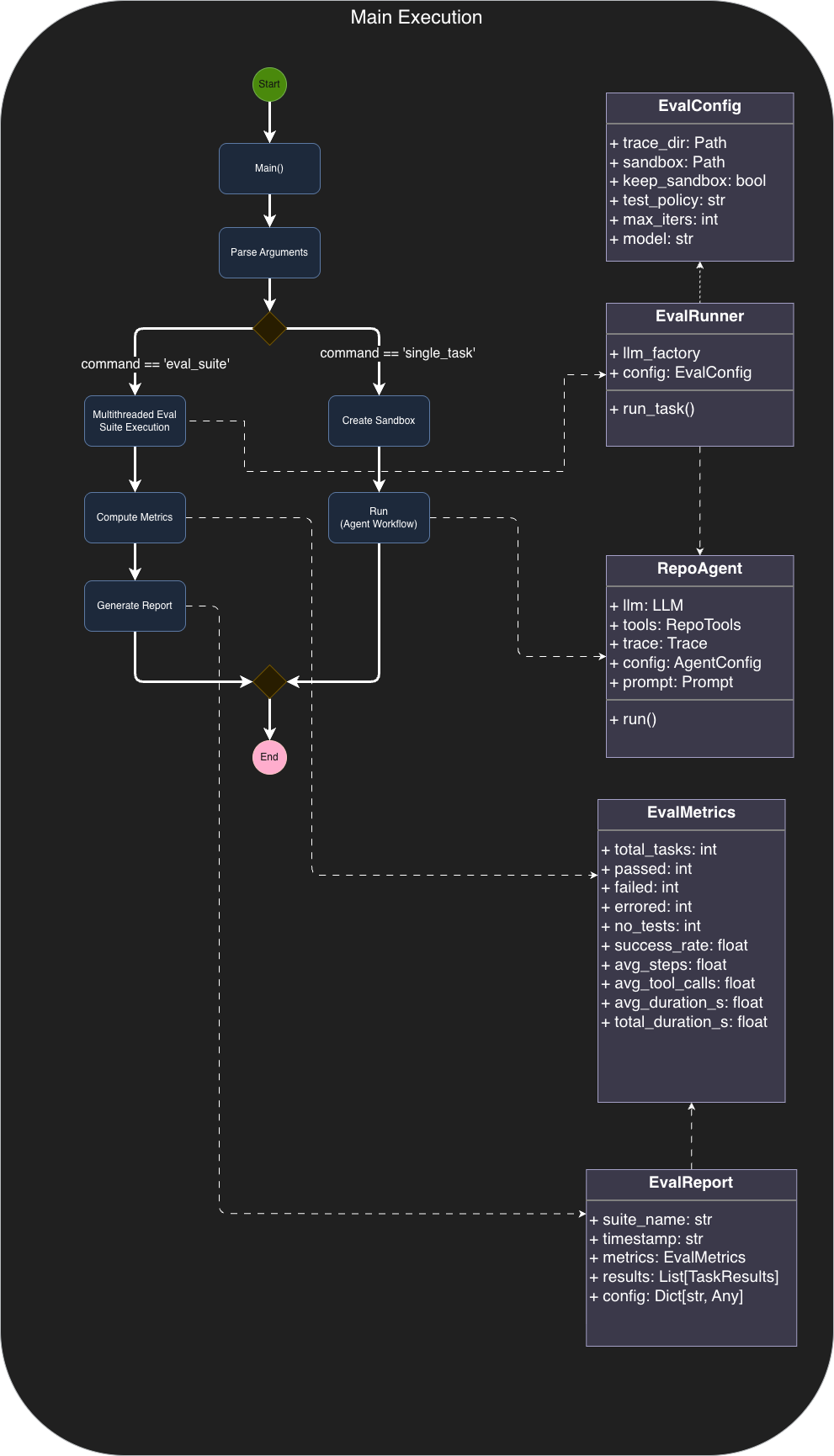
2) Tool protocol refactor: native tool calling → JSON tool calling
-
What changed
- Introduced
tool_protocol=json: instead of relying on native function/tool calling, the model outputs explicit JSON describing the tool call. - Kept
tool_protocol=nativeas an option, but added the JSON mode as a first-class protocol.
- Introduced
-
Why it changed
- Fine-tuning workflows (Together SFT/DPO) require training samples where the tool call is explicit in the assistant output—JSON is the cleanest portable representation.
- JSON tool calls also make parsing, dataset creation, and debugging easier because the tool invocation is visible and auditable.
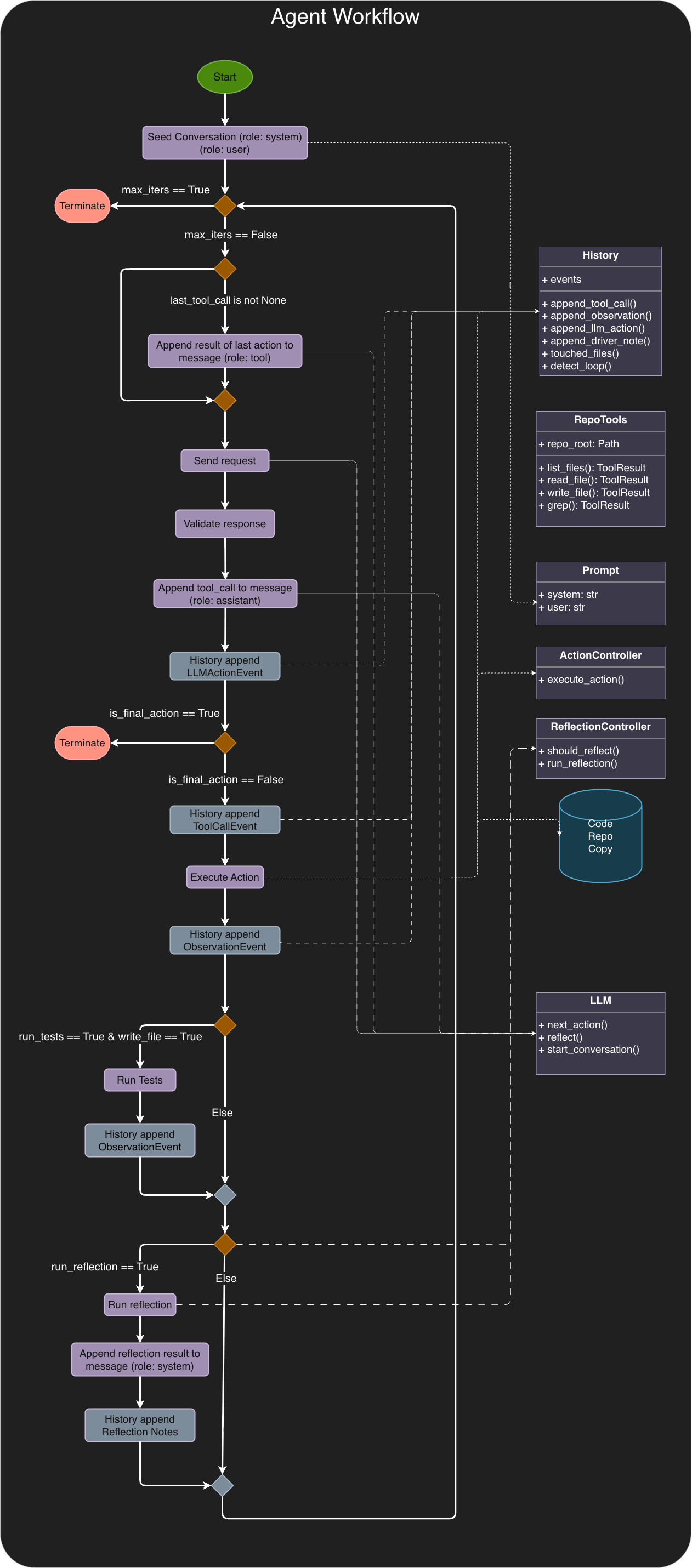
3) Response API → Chat Completions multiturn (and removing the history table)
-
What changed
- Migrated from a Response-style API approach to multi-turn Chat Completions.
- Removed the separate "history table" concept—conversation state is now represented directly as messages (system/user/assistant/tool).
-
Why it changed
- The explicit message list is easier to reason about, replay, and fine-tune on.
- It reduces statefulness and "hidden coupling" in the agent: the prompt you see is the prompt the model sees.
4) Prompt + driver hardening (protocol + invariants)
-
Files touched
src/llm_repo_agent/prompts.pysrc/llm_repo_agent/agent.pytests/test_driver_note_ordering.py
-
What changed
-
Made the system prompt explicitly tool-protocol aware (different instructions for native vs JSON tool calls).
-
Added a FIRST ACTION invariant: require
list_files(rel_dir='.', ...)before any other tool call. -
Added a WRITE RULE invariant: only
write_filemodifies the repo; the finalchangesfield is descriptive only. -
Ensured reflection / driver notes are appended as
systemmessages without breaking the strict adjacency rule:assistant(tool_call)→tool(result)must remain contiguous.
-
-
Why it changed
- These invariants reduce agent thrash, prevent "fake edits," and stop subtle message-order bugs that break tool execution.
5) Sandbox added
-
What changed
- Added a sandbox layer for running repo operations in a controlled environment.
-
Why it changed
- Isolates execution, reduces risk of unintended filesystem damage, and makes runs more reproducible (especially under evaluation).
6) Multithreading added
-
What changed
- Added multi-threaded execution for workloads that are embarrassingly parallel (evaluation rollouts, data generation, etc.).
-
Why it changed
- Significantly improves throughput and lets you run Monte Carlo-style evaluation and dataset generation in reasonable wall-clock time.
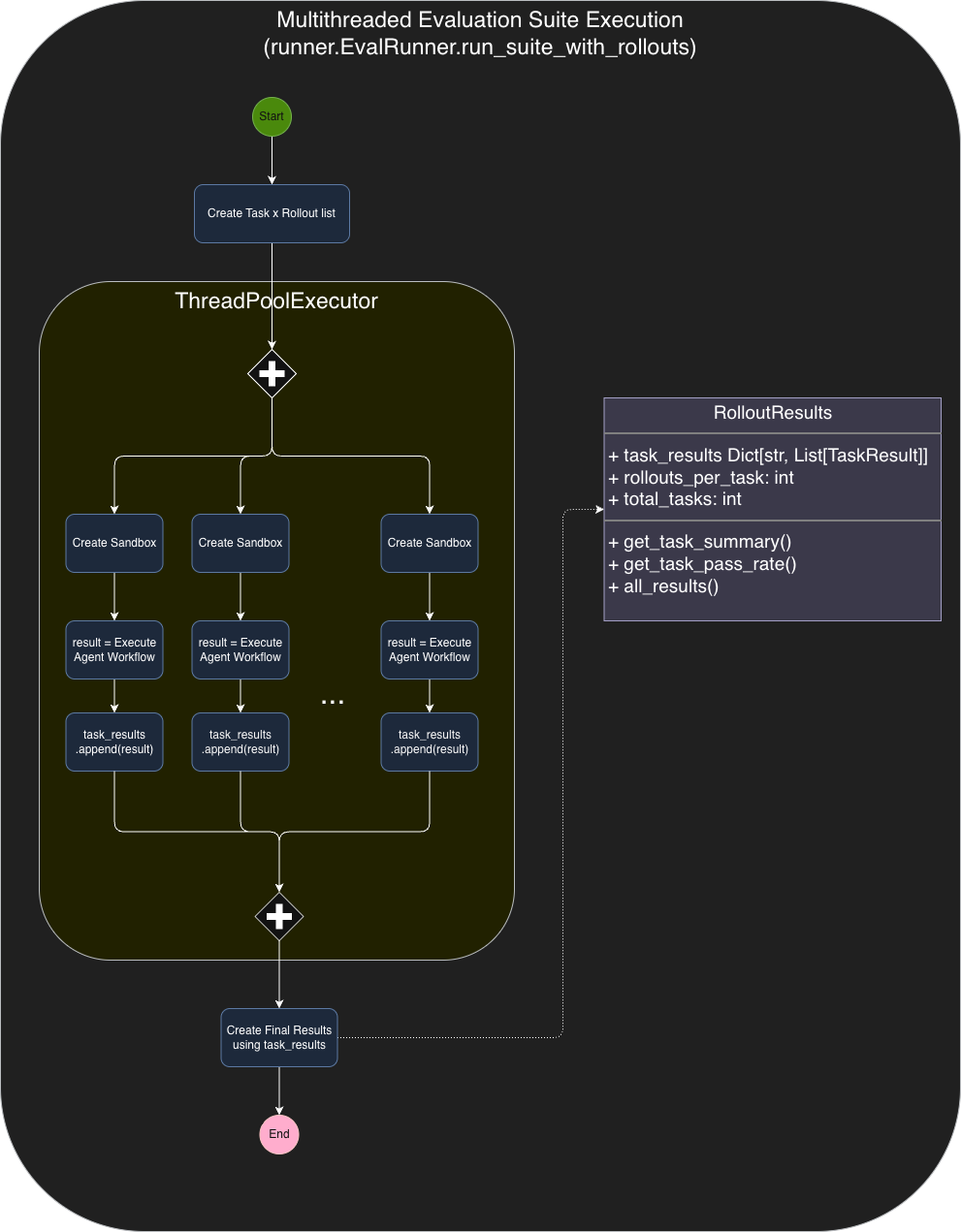
7) Evaluation harness upgrade: multiple rollouts per task
-
What changed
- The eval harness can now run multiple rollouts per task (Monte Carlo style) and aggregate metrics.
-
Why it changed
- Agent performance is high-variance; single runs can mislead. Multiple rollouts expose stability, failure modes, and real expected performance.
8) SFT pipeline built (and iterated)
-
What changed
-
Implemented an SFT workflow (documented in
@sft_plan_refined.md):- data generation (~1600 samples)
- fine-tune job kickoff (Together)
sft-extractcommand for extracting usable training traces- later consolidated into / replaced by the
prefscommand for data handling
-
-
Why it changed
- Goal was to fine-tune a smaller model (Qwen2.5-7B-Instruct) to reliably emit valid JSON tool calls as a cost-reduction strategy.
9) DPO pipeline (honorable mention)
-
What changed
- Implemented preference data generation via
prefs. - Added Together DPO fine-tune job kickoff support.
- Added cost estimation plumbing to understand budget impact before training.
- Implemented preference data generation via
-
Why it changed
- DPO was the next step after SFT: optimize tool-choice quality / behavior using preference pairs, with LoRA where available.